
Towing Laws in Colorado: What Drivers Need to Know
Understanding Colorado towing laws is essential whether you're hauling construction equipment across Denver, moving your camper through Boulder, or towing a trailer up the winding mountain roads near Aspen. These laws...
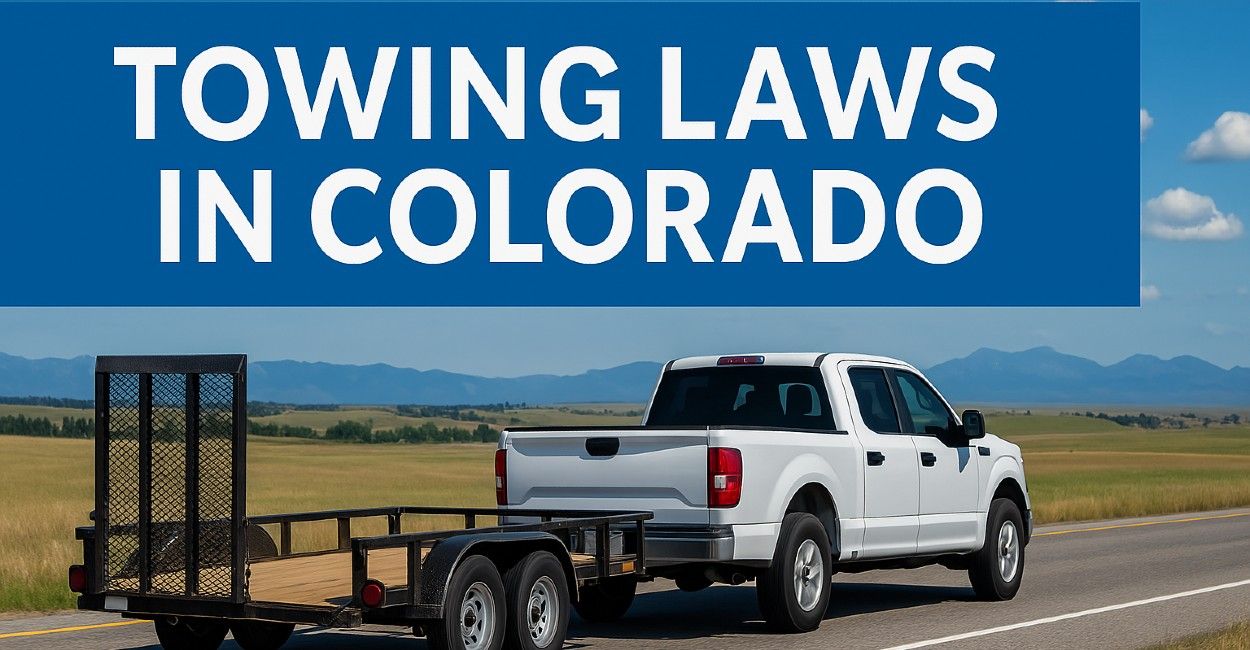
In Colorado, trailers over 3,000 lbs require independent brakes on all wheels plus a breakaway system; trailers under 3,000 lbs only need taillights, reflectors, and safety chains. There is no separate posted towing speed limit, but drivers are advised to travel 5–10 mph below the posted limit, especially on mountain roads. On highways with three or more lanes, towing vehicles must stay in the right or center lanes. A standard Class R license covers most personal towing; a CDL is required when the combined weight exceeds 26,000 lbs and the trailer alone exceeds 10,000 lbs.
Understanding Colorado towing laws is essential whether you're hauling construction equipment across Denver, moving your camper through Boulder, or towing a trailer up the winding mountain roads near Aspen. These laws are in place to keep drivers safe, prevent accidents, and ensure responsible towing across the state’s diverse landscapes.
This guide covers everything you need to know about towing laws in Colorado, including weight limits, lighting requirements, braking systems, and license classifications.
Vehicle Weight and Towing Capacities in Colorado
Know Your Vehicle's Tow Rating
Before hitching a trailer, check your vehicle's Gross Vehicle Weight Rating (GVWR) and Gross Combined Weight Rating (GCWR). These ratings, provided by the vehicle’s manufacturer, help you stay within safe towing limits. Exceeding them can strain your engine, brakes, and transmission—and may result in fines if caught by law enforcement.
Trailer Weight Classifications
Colorado law requires different safety features based on trailer weight:
- Trailers under 3,000 lbs: Must have taillights, reflectors, and safety chains.
- Trailers over 3,000 lbs: Require independent braking systems and breakaway brakes.
Trailer Brake Requirements in Colorado
If your trailer exceeds 3,000 lbs, Colorado requires that it have brakes on all wheels. Additionally, a breakaway system is mandatory. This system applies the brakes if the trailer becomes disconnected from the towing vehicle.
Towing Speed Limits and Lane Usage
Speed Limits
There is no separate posted towing speed limit in Colorado unless otherwise indicated. However, it's recommended that vehicles with trailers travel 5–10 mph slower than the posted speed limit, especially on mountain roads and in poor weather conditions.
Lane Restrictions
On highways with three or more lanes in one direction, towing vehicles must stay in the right or center lanes. Passing is only permitted in the left lane when necessary.
Safety Chain and Hitch Laws
Colorado mandates the use of safety chains when towing a trailer. These must be strong enough to keep the trailer connected to the towing vehicle in case the primary hitch fails.
The hitch and coupling must also be appropriately rated for the gross trailer weight and properly secured before driving.
Lighting and Reflector Requirements
To ensure visibility, Colorado towing laws require:
- Tail lights and brake lights
- Turn signals
- License plate light
- Two red reflectors on the rear of the trailer
If your trailer is wider than your vehicle or blocks your taillights, it must have its own set of working lights. All lights must be visible from at least 500 feet at night.
Mirror and Visibility Requirements
When towing in Colorado, you must have mirrors that provide a clear view 200 feet behind the trailer. Extended side mirrors are often necessary for wider trailers or enclosed units.
Driver’s License Requirements for Towing in Colorado
Class R (Regular Driver’s License)
Covers standard towing for non-commercial vehicles and trailers under 26,000 lbs combined GVWR.
Commercial License (CDL)
Required when:
- Combined vehicle and trailer weight exceeds 26,000 lbs, and the trailer alone weighs more than 10,000 lbs
- You are towing as part of a business or transporting passengers
Parking and Storage of Trailers in Colorado
Urban and Residential Areas
Cities like Denver, Colorado Springs, and Fort Collins have specific ordinances for trailer parking. In most cases, trailers cannot be parked on public streets for more than 24–72 hours without a permit.
Storage Guidelines
Unattended trailers must not obstruct traffic or sidewalks. Many municipalities require trailers to be stored off-street or on private property behind fences or enclosures.
Winter and Mountain Towing Considerations
Towing through the Rocky Mountains brings additional challenges. Here are some important seasonal tips:
- Use trailer brakes on steep downgrades to avoid overusing your vehicle brakes.
- Carry tire chains or snow-rated tires when towing between September and May.
- Be aware of Chain Law Level 1 and 2 restrictions on I-70 and other mountainous highways during snowstorms.
Conclusion: Know the Towing Laws in Colorado Before You Hit the Road
Whether you're towing a utility trailer in Aurora, a camper in Durango, or a car hauler near Pueblo, understanding Colorado towing laws helps keep everyone on the road safe. From brake requirements to lane usage rules, being informed means fewer headaches, no surprise tickets, and peace of mind.
Before your next haul, double-check your trailer weight, hitch, lighting, and permits—and enjoy the ride.
Frequently Asked Questions
Do I need trailer brakes when towing in Colorado?
What are Colorado's trailer size limits?
Do I need a special driver's license to tow in Colorado?
Are there extra towing rules for Colorado mountain roads?
Can I park my trailer on the street in Denver or other Colorado cities?
Ready to haul?
Find the right trailer near you — or list yours and start earning.