
The Ultimate Guide to Loading a Car onto a Flatbed Trailer: Positioning for Safety and Balance
Loading a car onto a flatbed trailer isn't just about getting it up there; it's about ensuring it's positioned correctly for safe transportation. Whether you're hauling a classic car to a show, moving a vehicle across...
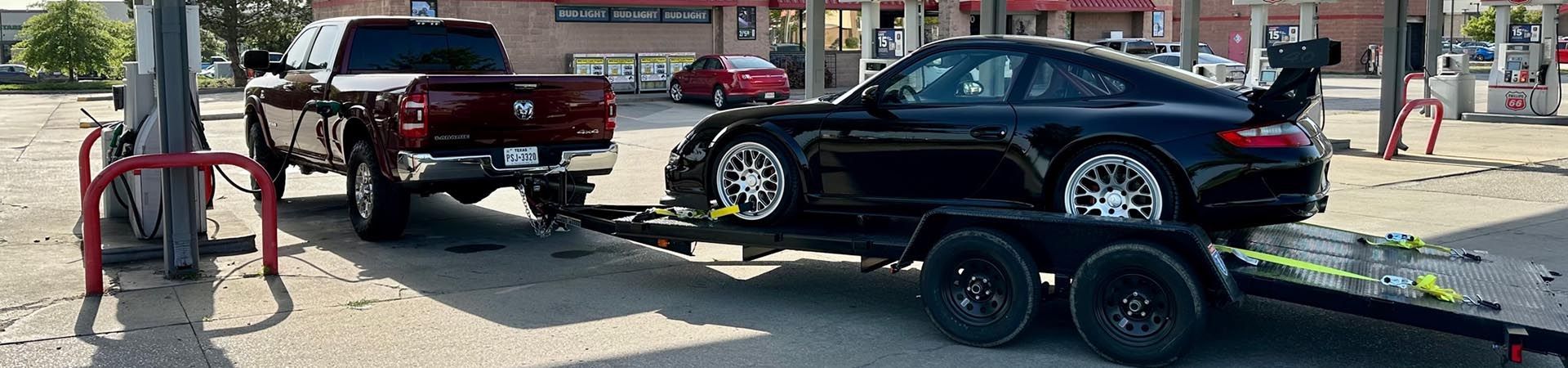
To safely load a car onto a flatbed trailer, drive it slowly and centered up the ramps, then position the vehicle so approximately 60% of its weight sits forward of the trailer's axle centerline and 40% sits behind it. Secure the car using ratchet straps attached to solid chassis or frame points—never to suspension or axle components—and add wheel chocks around all four tires. Before departure, inspect the trailer deck, test all lights and brakes, and confirm every strap is tight and the vehicle hasn't shifted from its balanced position.
Loading a car onto a flatbed trailer isn't just about getting it up there; it's about ensuring it's positioned correctly for safe transportation. Whether you're hauling a classic car to a show, moving a vehicle across the country, or taking your race car to the track, how you load and position your car can make a significant difference in the stability of the transport. Here’s your complete guide to doing it right.
Step 1: Preparation Before Loading
Before you even drive your car onto the trailer, preparation is key.
- Inspect the Trailer: Ensure that the flatbed trailer is in good condition. Check the deck for any damage or debris that could harm the vehicle or impede safe loading. The tires, brakes, and lights of the trailer should also be inspected to ensure everything functions correctly.
- Gather Necessary Equipment: Have your ratchet straps and wheel chocks ready. You’ll need these to secure the vehicle once it’s on the trailer.
Step 2: Aligning the Car for Loading
- Check the Ramp and Bed Alignment: The ramps used to load the car should be firmly attached to the trailer and wide enough to accommodate the vehicle’s wheels comfortably.
- Position the Trailer: The trailer should be on a flat, stable surface to prevent it from moving or tilting while you load the car.
Step 3: Driving onto the Trailer
- Slow and Steady: Drive the car slowly up the ramps. It’s essential to keep the car centered as it ascends the ramps and moves onto the trailer.
- Avoid Sudden Movements: Sudden accelerations or stops can cause the car to become unbalanced or the trailer to shift.
Step 4: Positioning the Car over the Axles
Positioning the car correctly over the trailer's axles is critical for maintaining balance during transport.
- Find the Balance Point: The goal is to distribute the weight evenly across the axles. The car’s heaviest part should be positioned slightly forward of the trailer’s axle centerline. This placement helps in distributing the weight more evenly between the trailer's axles and the tow vehicle.
- Check Weight Distribution: Ideally, you want about 60% of the weight in front of the trailer’s axle and 40% behind it. This distribution helps maintain stability and control during towing.
Step 5: Securing the Car
Once the car is correctly positioned, it’s time to secure it.
- Use Ratchet Straps: Attach ratchet straps to solid points on the vehicle’s chassis or frame. Avoid using parts that can easily be damaged, like the suspension or axles.
- Tighten the Straps: The straps should be tightened so that the car does not move but not so tight that they cause damage to the vehicle.
- Add Wheel Chocks: Place wheel chocks around the tires to prevent any rolling.
Step 6: Final Checks Before Departure
- Double-Check All Connections: Before hitting the road, double-check that all straps are secure and that the vehicle hasn’t moved from its optimal position.
- Inspect the Trailer’s Lights and Brakes Again: Ensure that all the lights and brakes of the trailer function correctly as an added safety measure.
Conclusion
Loading a car onto a flatbed trailer requires careful attention to detail and an understanding of weight distribution. By following these steps, you ensure that the vehicle is safe and secure during transport, reducing the risk of damage and accidents. Remember, taking a little extra time to load the car properly can save you a lot of trouble down the road.
Happy hauling!
Frequently Asked Questions
Where should I position a car on a flatbed trailer for safe towing?
What's the correct way to attach ratchet straps to a car on a flatbed?
Why do I need wheel chocks when the car is already strapped down?
What should I check on the flatbed trailer before loading a car?
How do I drive a car onto a flatbed trailer ramp safely?
Ready to haul?
Find the right trailer near you — or list yours and start earning.