
Full Beginners Guide to Laws for Towing a Trailer in Kentucky
Towing a trailer in Kentucky requires understanding both the state's specific towing laws and ensuring your trailer meets the required safety standards. Whether you're towing a boat, car, RV, or utility trailer, it's...
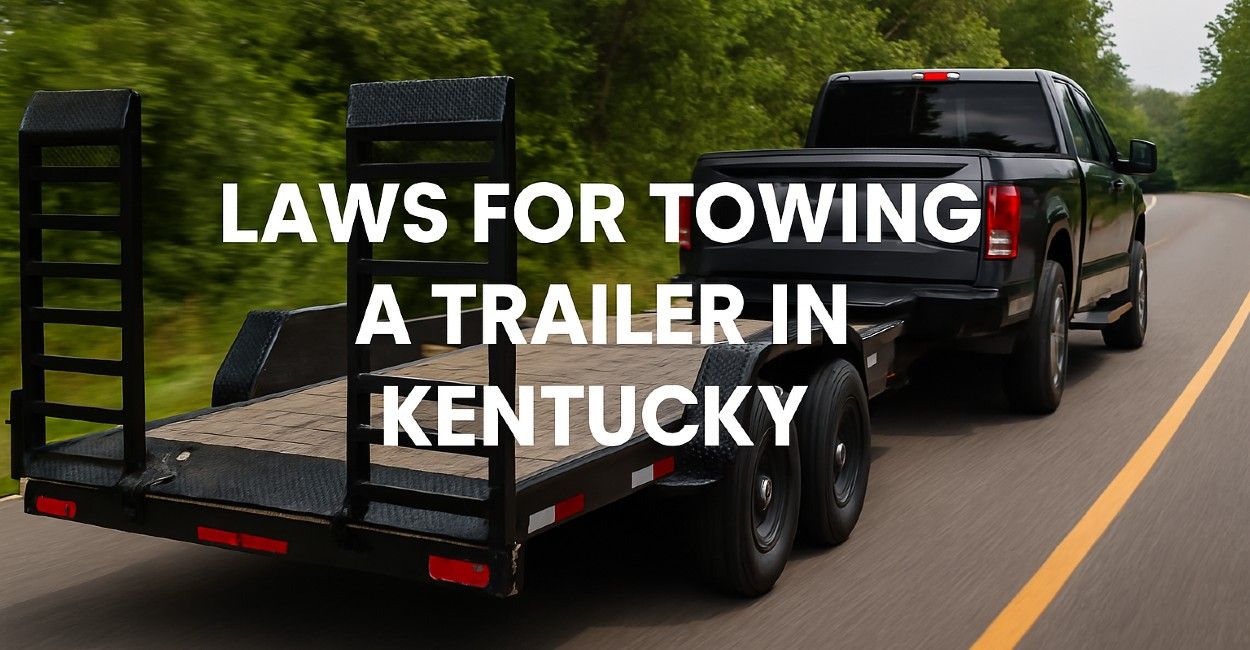
In Kentucky, trailers over 3,000 lbs must have brakes capable of stopping independently, and all trailers must have brake lights, turn signals, tail lights, and reflectors. A standard Class D driver's license covers personal towing; a CDL is required for large or commercial trailer combinations. Trailers cannot exceed 8.5 feet in width or contribute to a total rig length over 65 feet without special permits. All trailers must be registered with the Kentucky Transportation Cabinet and display valid license plates.
Towing a trailer in Kentucky requires understanding both the state's specific towing laws and ensuring your trailer meets the required safety standards. Whether you're towing a boat, car, RV, or utility trailer, it's important to stay informed about the rules that apply to trailer towing in Kentucky. This guide will walk you through Kentucky's towing laws and how to stay compliant.
General Requirements for Towing a Trailer in Kentucky
When towing a trailer in Kentucky, there are general requirements that drivers must follow to ensure safety and compliance with the law.
Driver’s License and Vehicle Registration
To tow a trailer in Kentucky, the driver must have a valid driver’s license. If you are towing a large trailer or combination of vehicles, a commercial driver’s license (CDL) may be required. For standard personal towing, a Class D license is sufficient. Additionally, all trailers need to be registered with the Kentucky Transportation Cabinet and must have proper license plates.
Towing Capacity
Kentucky law requires that the towing vehicle be capable of towing the trailer without exceeding its maximum towing capacity. Overloading your towing vehicle or trailer can cause accidents and result in fines. Always verify the GVWR (Gross Vehicle Weight Rating) of both the towing vehicle and the trailer before starting your journey.
Towing a Trailer in Kentucky – Key Safety Features
Kentucky enforces specific safety features for all towed vehicles, including lights, brakes, and weight limits.
Lights and Reflectors
Trailer lighting is a critical part of towing safety in Kentucky. Every trailer must be equipped with brake lights, turn signals, and tail lights. If your trailer is over 3,000 pounds in gross weight, it must have reflectors and a working lighting system. For safety, make sure the lighting system is in good working order before towing your trailer on Kentucky roads.
Brakes
If your trailer weighs over 3,000 pounds, it is required by Kentucky law to have brakes. For trailers over 3,000 pounds, brakes must be capable of stopping the trailer independently of the towing vehicle, especially on steep grades or when the trailer is heavily loaded. Make sure your trailer’s brake system is inspected and functioning before each trip.
Weight Limits and Towing Restrictions in Kentucky
There are certain weight limits and restrictions on towing a trailer in Kentucky, and these vary depending on the trailer type and the region you're in.
Gross Vehicle Weight Rating (GVWR)
The GVWR refers to the total weight of the trailer, including cargo, that a vehicle can safely tow. If the weight exceeds the legal limits, the driver may be subjected to fines. To avoid potential violations, always verify the GVWR of both your vehicle and trailer.
Width and Length Limits
Kentucky has specific regulations regarding the dimensions of trailers being towed. For standard highways, a trailer cannot exceed 8.5 feet in width without requiring special permits. Additionally, the total length of the towing vehicle and the trailer should not exceed 65 feet without prior permission. If you're towing larger equipment, you may need to get a wide-load permit.
Towing Laws for Specific Types of Trailers
Towing Boats and RVs in Kentucky
Kentucky, with its numerous lakes and rivers, is a popular state for boat towing. When towing boats or RVs, ensure your boat trailer or camper is in good condition and meets all required regulations. RVs also need to be inspected for the working brake systems and lighting before setting out on the road.
Towing Commercial Trailers
If you're towing a commercial trailer, such as a flatbed trailer or car hauler, special permits may be required. Check with the Kentucky Department of Transportation (KYDOT) to confirm that your commercial trailer is compliant with state laws.
Penalties for Violating Towing Laws in Kentucky
Failure to comply with Kentucky's towing laws can result in fines and penalties. Unsafe towing or exceeding weight limits can lead to ticketing or even having your trailer impounded. Additionally, improper lighting or broken brake systems could cause you to fail an inspection and face financial penalties.
What to Do if Stopped by Law Enforcement
If you’re stopped by law enforcement for a towing violation, you’ll likely be asked to fix the issue immediately or face fines. Carrying all necessary documents such as proof of registration, insurance, and inspection can help expedite the process.
Conclusion
Towing a trailer in Kentucky requires attention to detail and adherence to state regulations. Always ensure that your vehicle and trailer are properly equipped and maintain compliance with Kentucky trailer towing laws. By following the correct procedures, you can safely and legally tow your trailer across the state, whether you’re hauling a boat in Louisville, moving equipment in Lexington, or hauling your gear through Bowling Green.
Frequently Asked Questions
What are the width and length limits for trailers in Kentucky?
Do I need trailer brakes in Kentucky?
What driver's license do I need to tow a trailer in Kentucky?
Do I need to register my trailer in Kentucky?
Do I need special permits to tow commercial trailers in Kentucky?
Ready to haul?
Find the right trailer near you — or list yours and start earning.