
A Comprehensive Guide to Towing Laws in New York State
Trailer Registration and Licensing in New York All trailers operated in New York must be registered through the New York Department of Motor Vehicles (DMV). For trailers weighing over 999 pounds, a title is required....
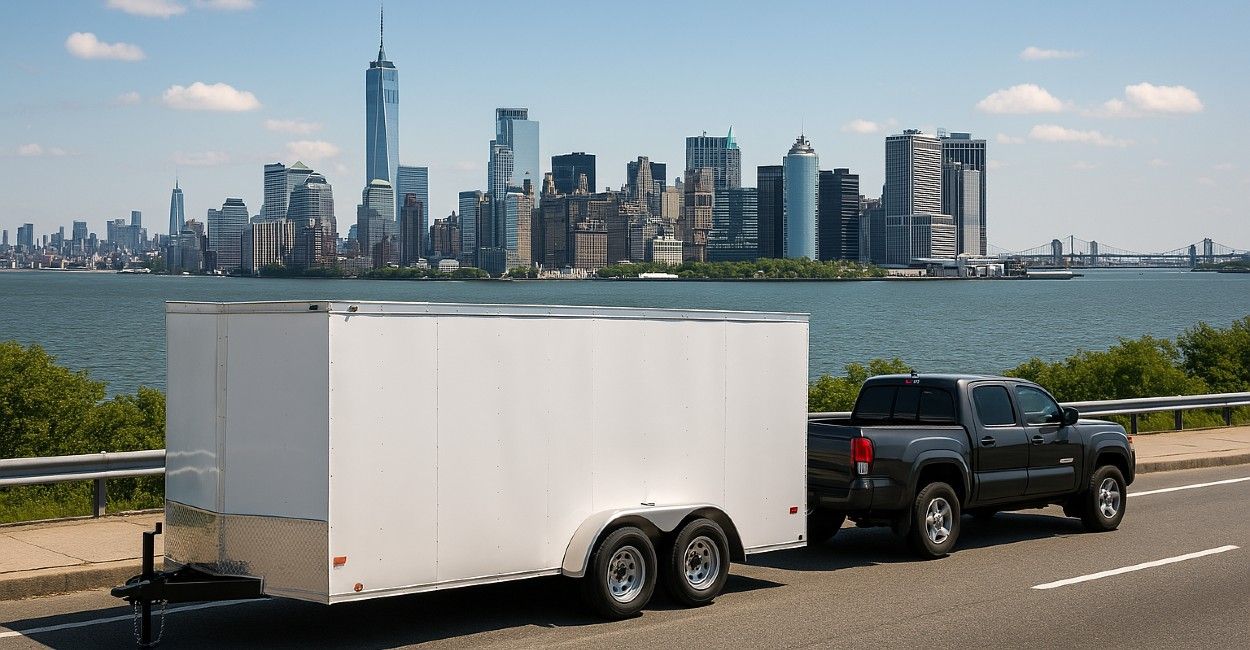
New York requires brakes on all trailers with a GVWR over 1,000 lbs—one of the lowest brake thresholds in the country—plus safety chains, brake lights, tail lights, and reflectors on every trailer. Trailers must not exceed 48 feet in length (65 feet combined), 102 inches wide, or 13 feet 6 inches tall. Trailers over 999 lbs require a title, registered with the New York DMV. New York does not set a separate towing speed limit, but safe and reasonable operation is required by law.
Trailer Registration and Licensing in New York
All trailers operated in New York must be registered through the New York Department of Motor Vehicles (DMV). For trailers weighing over 999 pounds, a title is required. Owners must present proof of ownership, valid identification, and payment for registration and title fees. Once registered, a trailer license plate must be attached and clearly visible.
New York Trailer Size and Weight Restrictions
Trailer dimensions are strictly regulated in New York to promote safety on roadways:
- Maximum trailer length: 48 feet
- Combined vehicle and trailer length: 65 feet
- Maximum width: 102 inches
- Maximum height: 13 feet 6 inches
If your trailer exceeds any of these limits, you’ll need to apply for an oversize permit through the DMV.
Braking System and Safety Equipment
Trailers with a gross vehicle weight rating (GVWR) over 1,000 pounds must be equipped with their own braking system. Additionally, safety chains are mandatory and must be strong enough to hold the trailer in case the hitch fails.
- Independent brakes
- Safety chains
- Brake lights, tail lights, and reflectors
- Turn signals and license plate lights
Required Lighting and Reflectors
Proper lighting is essential for visibility and legal compliance. New York law requires:
- Two red tail lights
- Two brake lights
- Left and right turn signals
- Rear and side reflectors
- A light to illuminate the rear license plate
- Clearance lights for trailers over 80 inches wide
All lighting must be visible from a specified distance (typically 500 feet) and in working condition at all times.
Insurance for Towed Trailers
In most cases, liability coverage for trailers is extended from the towing vehicle’s insurance policy. However, if you want protection against theft, damage, or collision, you should consider adding comprehensive or collision coverage for your trailer.
Speed Limits and Towing Conduct
While New York does not impose a separate speed limit for towing, drivers are expected to operate at a safe and reasonable speed, especially in adverse weather or traffic conditions. It’s advised to maintain a lower speed when towing heavy loads to ensure control.
Parking and Towing Restrictions
New York municipalities may enforce specific trailer parking laws. Be sure to review local ordinances about parking trailers on public streets or in residential areas. Unattended or illegally parked trailers may be ticketed or towed.
Avoiding Violations and Penalties
Failing to meet trailer regulations may lead to fines, points on your license, and impoundment. To avoid issues, regularly inspect your trailer, ensure your documents are in order, and stay up to date with current laws.
Final Thoughts on Towing in New York
Understanding and following New York State’s trailer towing laws is critical for safety and compliance. Whether you’re hauling for business or recreation, being informed can help you avoid costly penalties. For easy access to local trailer rentals, visit BigLoads.com and browse listings in your area.
Frequently Asked Questions
When are trailer brakes required in New York?
What are New York's maximum trailer size limits?
Do I need to title and register my trailer in New York?
Is trailer insurance required in New York?
What lighting and reflectors are required on a trailer in New York?
Ready to haul?
Find the right trailer near you — or list yours and start earning.